
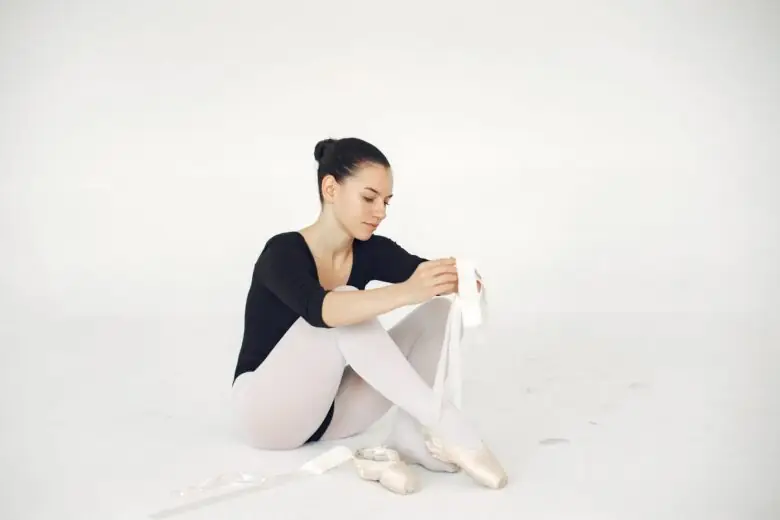
Colour and cut catch the eye, but the fabric decides how a leotard feels in class, whether it stays opaque and how many washes it survives. The label tells you more than the brand name. Here is what the common dancewear fabrics are like, how they handle sweat and washing, and a quick check before you buy.
Why fabric matters more than the brand
Most dancewear is a blend: a main fibre – cotton, nylon or polyester – plus elastane, also called spandex or Lycra. Elastane gives stretch and makes the garment spring back into shape; dancewear usually contains somewhere between about 10 and 20 percent. The main fibre decides how the fabric feels, how it deals with sweat and how it ages.
The main dancewear fabrics
| Fabric | Feel | Strengths | Watch out for | Best for |
|---|---|---|---|---|
| Cotton with elastane | soft, breathable | comfortable, good for sensitive skin | absorbs sweat, can lose shape and fade | children, beginners, warm-ups |
| Nylon (polyamide) with elastane, often sold as supplex | smooth, matte or with a slight sheen | keeps its shape, dries quickly, opaque | can feel warm | leotards and tights for daily training |
| Polyester with elastane | smooth | colourfast, durable | can hold on to odours | printed leotards, practice wear |
| Microfibre | very fine and soft | light, wicks moisture | usually more expensive | intensive training |
| Mesh and tulle | sheer | decorative, lets air through | delicate, snags easily | inserts, sleeves, skirts |
| Velvet | soft and heavy | elegant look | warm, needs careful washing | performances, exams |

Sweat and odour
Synthetic fabrics dry faster than cotton, but polyester in particular can hold on to odours. Wash dancewear after every class and do not leave it in your bag. More: why dancewear smells and how to fix it.
Washing that keeps dancewear in shape
- Turn garments inside out and wash them cold or at 30 °C, by hand or on a gentle cycle.
- Do not use fabric softener: it coats the fibres and makes them less elastic.
- Dry flat, away from heaters and direct sun. Never use the tumble dryer – heat damages elastane.
- Wash rhinestone and velvet pieces separately and by hand.
Tights and shoes
Ballet tights are usually nylon with elastane; microfibre tights are softer and often last longer. See how to choose ballet tights and our tights. For ballet slippers, canvas is light and breathable, leather is more durable and moulds to the foot – more in the guide to dance shoe soles and in our ballet shoes.

A 60-second fabric check before you buy
- Read the label: what is the main fibre, and is there elastane?
- Stretch test: pull the fabric gently – it should spring straight back.
- Light test: stretch it in front of a light. If you can see through it, it will be see-through on the body too.
- Seams: flat and even, with no loose threads.
- Care label: can you wash it the way you will need to?
Ready to choose? See our leotards and the guide to leotard brands, fabrics and fit.
FAQ
What is the best fabric for a ballet leotard?
Nylon with elastane for regular training; cotton with elastane for young beginners and sensitive skin.
What is supplex?
A trade name for a nylon fabric with a soft, cotton-like feel. It keeps its shape and dries quickly.
Are Lycra, spandex and elastane the same?
Yes. Elastane is the fibre; spandex is the American name, and Lycra is a brand name.


