

Search for the best leotard brand and you will find long rankings. The honest answer is simpler: there is no single best brand. A good leotard fits your body, meets your school’s dress code and survives many washes. Here is what the well-known brands are known for, what to check before you buy and how to make a leotard last.
Well-known leotard brands
These brands come up again and again among dancers and teachers. The overview describes what they are known for – it is not a test result.
- Bloch (Australia) – known for pointe shoes and a wide range of class leotards.
- Capezio (USA) – classic class leotards and tights in many sizes.
- Wear Moi (France) – elegant cuts and fashionable class and performance styles.
- Grishko (Russia) – pointe shoes and classical dancewear.
- So Danca (Brazil) – affordable class leotards and dance shoes.
- Yumiko – leotards made to order: dancers choose the style, fabric and colours.
In our shop, most ballet leotards come from Grand Prix: camisole, tank, short- and long-sleeved styles, from about CHF 10 to CHF 60.
What to check before you buy
- Dress code: many ballet schools prescribe colour and style by level, so check before you buy.
- Fabric: cotton-elastane is soft and breathable; nylon-elastane (often called supplex or lycra) dries faster, keeps its shape and is less see-through; microfibre feels smooth and light.
- Opacity: check light colours under bright studio light. A front lining helps.
- Cut: camisole, tank, short or long sleeves, high or low leg cut, open or closed back – choose what you feel comfortable working in.
- Size: sizes differ between brands, so use the brand’s size chart and measure height, chest and torso length.
How a ballet leotard should fit
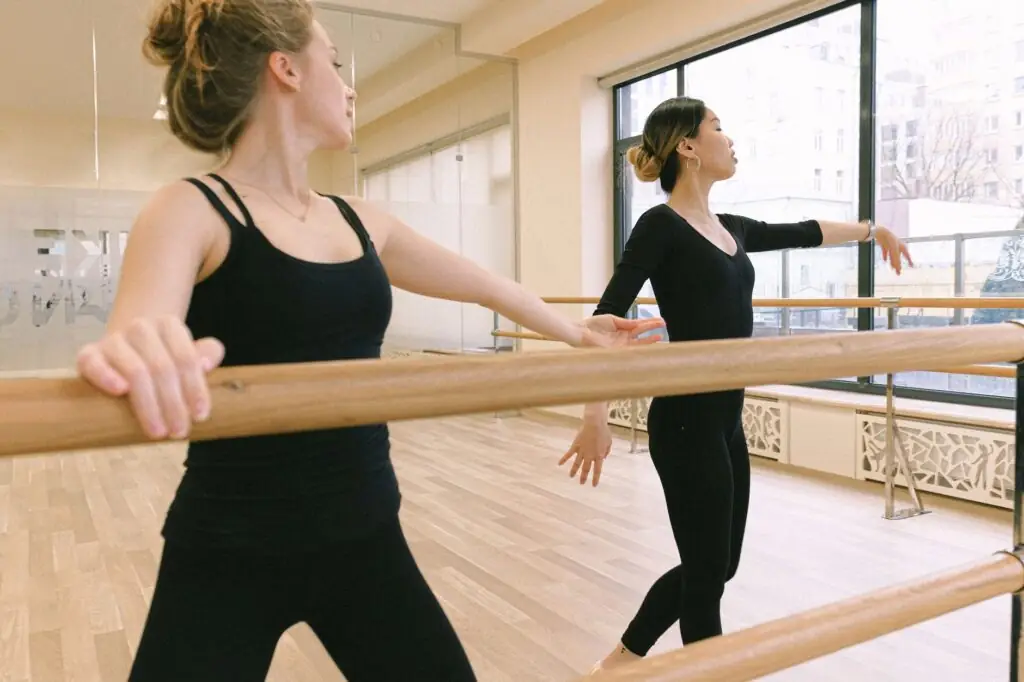
A leotard should fit like a second skin: snug, with no gaping at the neckline or armholes and no folds at the waist. It should not pull at the shoulders when you lift your arms or ride up in a grand plié. For children, buy the size that fits now: a leotard that is too big hides the alignment the teacher needs to see.
Making a leotard last
How you wash a leotard often matters more than the brand. Wash it inside out, in cold water, by hand or on a gentle cycle, without fabric softener, and let it dry flat away from heat and direct sun. Never use the tumble dryer: heat damages the elastane. Rotating two or three leotards also helps each one last longer. More tips: how to wash dancewear.
Which leotard for which dancer?
- Beginners and children: a simple cotton or nylon-elastane leotard in the school’s colour. Two are enough to rotate.
- Daily training: nylon-elastane or microfibre, which dries quickly and keeps its shape.
- Performances and exams: a more elaborate style – velvet, mesh or a special back – if the school allows it.
More on styles: ballet leotard styles explained. For gymnastics, see rhythmic gymnastics leotards.
FAQ
What are the best leotard brands?
There is no single winner. Bloch, Capezio, Wear Moi, Grishko and Yumiko are among the best-known names. The best leotard is the one that fits you, meets your dress code and is made of a fabric that suits how often you train.
Are expensive leotards worth it?
For daily training, a well-made mid-range leotard is enough. A premium model pays off for performances or when you want a special cut or fabric.
How many leotards does a dancer need?
Two or three for regular classes, so you can wash one while you wear another.


