
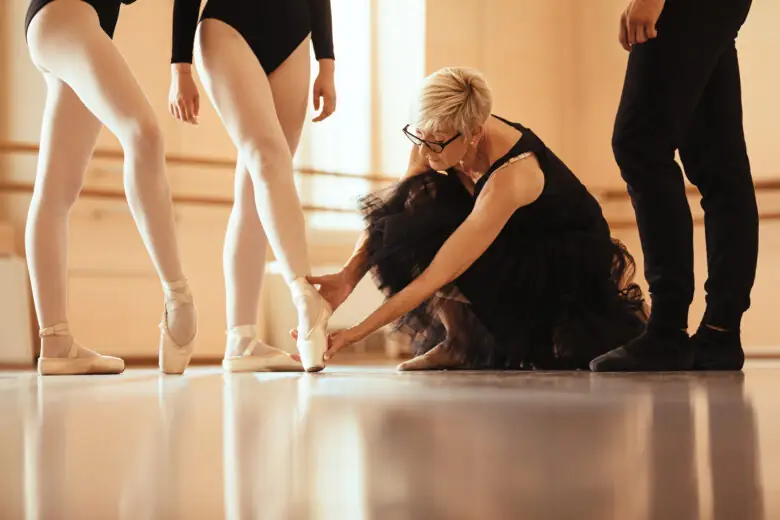
Many dancers stay in one style for years – and many teachers recommend a second one. Not to replace the first, but because every style trains something the others neglect. Ballet, ballroom and rhythmic gymnastics in particular complement each other surprisingly well. Here is what each style offers the others, and how to combine them without overloading yourself.

Why one style can reach a ceiling
Every style repeats its own patterns: ballet works on turnout and line, ballroom on partnering and travelling, rhythmic gymnastics on flexibility and handling the apparatus. Over the years, the same muscles, movements and habits are trained again and again – and others hardly at all. A second style fills some of those gaps and gives you a fresh view of familiar problems.
What ballet gives other styles
- Placement and posture: a stable centre, a long spine and awareness of alignment.
- Footwork: strong, articulate feet and clean pointing.
- Balance and turns: spotting, preparation and control on one leg.
- Lines: a feel for clear shapes – useful for arm styling in ballroom as well as for poses in gymnastics.
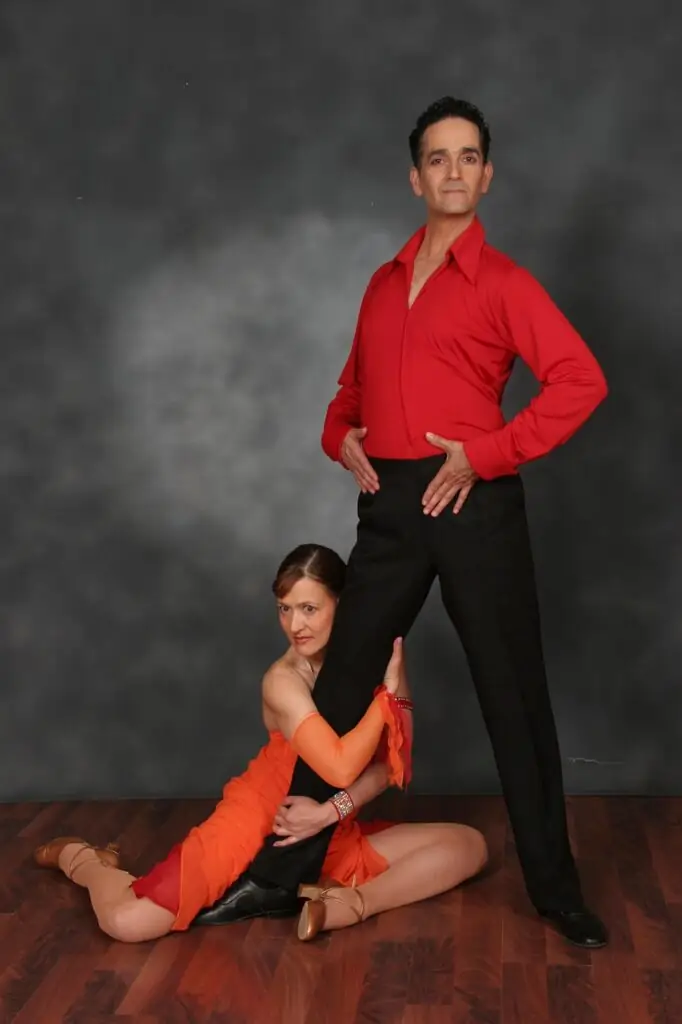
What ballroom and Latin give other styles
- Musicality and rhythm: dancing exactly on the beat and playing with timing.
- Travelling: moving across the floor with control and speed.
- Connection: leading, following and reacting to another person – a different kind of awareness.
- Presentation: projecting to an audience and to judges.
What rhythmic gymnastics gives other styles
- Flexibility and active strength: not only reaching positions, but holding them.
- Coordination: working with an apparatus trains timing, hand–eye coordination and spatial awareness.
- Discipline in repetition: routines are polished until every detail is reliable.
How to combine styles sensibly
- Start with one extra class a week in the second style, not a full programme.
- Tell both teachers. Some habits clash – for example, ballet turnout and the parallel feet of many Latin and contemporary movements. Teachers can help you switch between them.
- Watch the total load. More classes mean more stress on feet, knees and hips. Plan rest days – see recovery for dancers.
- Wear the right shoes and clothes for each style; a ballet slipper is not a ballroom shoe.
For training outside dance – swimming, strength work, Pilates and more – read the cross-training myth.
FAQ
Is ballet good for ballroom dancers?
Yes, many ballroom dancers benefit from ballet for posture, balance, footwork and lines. It complements their training rather than replacing it.
Can gymnasts take dance classes?
Yes. Ballet is a traditional part of rhythmic gymnastics training, and other styles help with musicality and expression.
How many styles should I train at once?
That depends on your time, level and recovery. One main style plus one complementary class is a good start for most dancers.


