
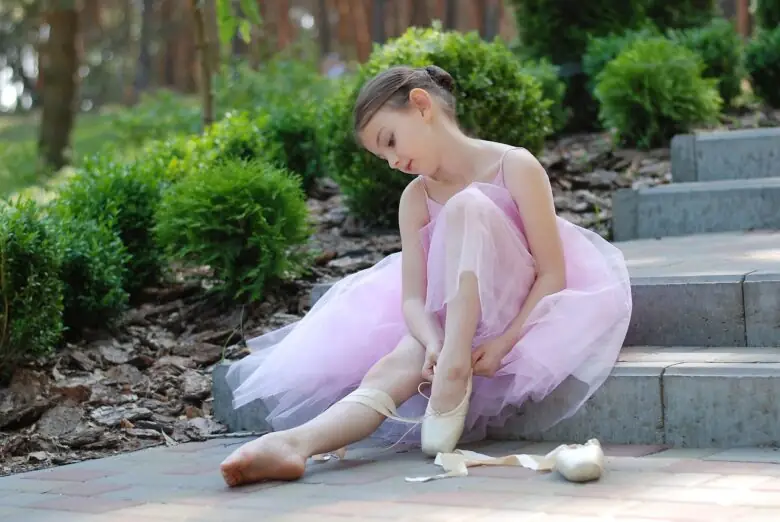
Dancewear and dance shoes fit differently from everyday clothes, so the fitting room is where most buying mistakes happen – or are avoided. A leotard that looks fine on the hanger can slip in a plié; shoes in your street size can be too big for dancing. Here is how to try on dancewear and dance shoes properly before you buy.
Before you try anything on
- Know the dress code. Colour and style rules from your school narrow the choice. See dance class dress code and etiquette.
- Bring what you dance in: tights or the socks you wear for class.
- Measure yourself: height, chest, waist, hips and torso length for leotards; foot length in centimetres for shoes. See leotard sizing by height.
Trying on a leotard
- Arms up: the straps should not pull on the shoulders.
- Grand plié: the leotard should not ride up or cut in.
- Bend forward: the neckline should stay in place.
- Light check: stand under bright light – lighter colours should stay opaque.
A leotard should fit like a second skin, snug but without folds or pressure points. Cuts and fabrics: ballet leotard styles explained and the dancewear fabric cheat sheet.
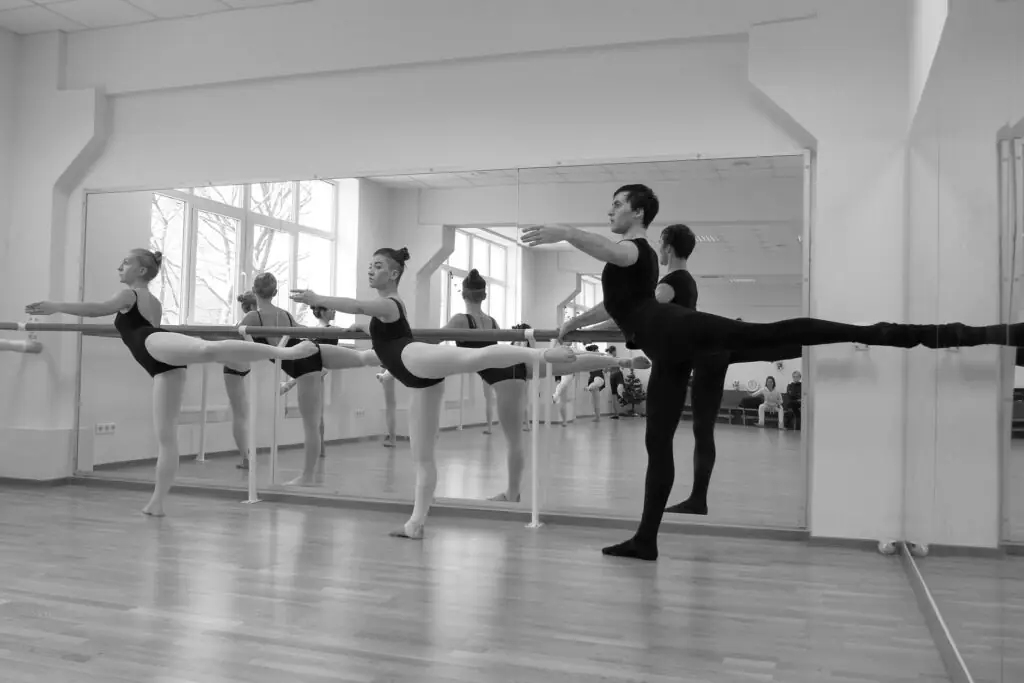
Trying on dance shoes
- Dance shoes are snugger than street shoes: the foot should not slide inside.
- The heel stays in the shoe when you rise onto demi-pointe.
- In ballet slippers the toes lie flat; in Latin sandals they reach the edge of the sole.
- Walk a few steps, rise, turn and do a plié before you decide.
- Try shoes in the afternoon or evening – feet swell a little during the day.
Flat or heeled?
In ballroom and Latin, men wear flat, closed dance shoes. Women usually wear closed court shoes for ballroom and open sandals with a higher heel for Latin. For a start, many choose a lower heel of about 5 cm; practice shoes with a low heel are a good alternative. The differences: Latin vs standard shoes for women. About soles: how to choose a dance shoe sole.

Where to try on dance shoes
If you can, try shoes and leotards on before you buy – sizes and lasts differ between brands. In our showroom at Torgasse 8 in Zurich you can try on dance shoes and dancewear and get advice. Buying online? Compare your foot length with the brand’s size chart and order the size that fits now.
Common fitting mistakes
- Buying shoes a size bigger “to grow into” – they make turning and balance harder.
- Choosing a leotard by age instead of height and torso length.
- Ignoring a pressure point because “it will stretch” – satin and patent hardly stretch.
- Buying everything at once before the first few classes.
FAQ
How should a dance leotard fit?
Snug like a second skin, without pulling at the shoulders or riding up in a plié.
Should dance shoes be tight?
Snugger than street shoes, but without pressure points or pain.
Can I buy dance shoes in my normal shoe size?
Not necessarily. Dance shoe sizes often differ from street sizes – go by foot length and the brand’s size chart.


