

Classes alone are rarely enough if you want to make real progress – but where do you practise in between? The living-room floor is often too hard, too slippery or too small, and studio time costs money every week. A portable dance floor and a rented studio solve the problem in different ways. Here is how to decide which suits your style, your space and your goals.
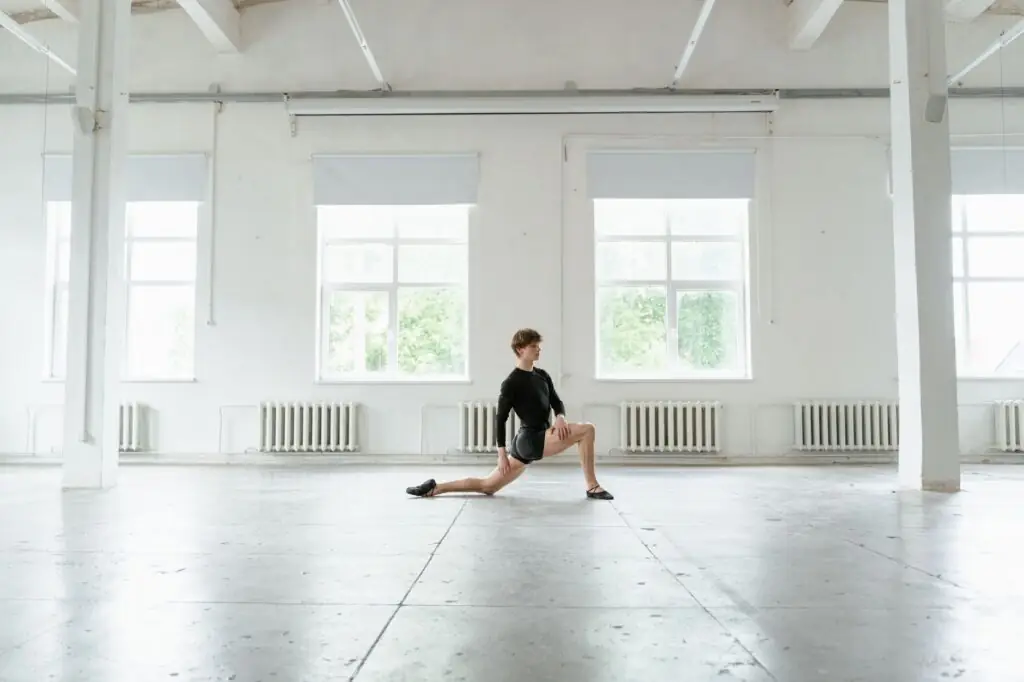
What a rented studio offers
- A proper dance floor: usually a sprung or cushioned floor with a dance surface – kinder to the joints in jumps.
- Space: room for travelling steps, jumps, partnering and choreography.
- Mirrors and a barre, often a sound system.
- A change of scene that makes it easier to focus.
The downsides: the cost adds up, you depend on availability and opening hours, and travelling there eats into practice time. Ask your dance school whether students can book free studios at quieter times – some schools offer this.
What a portable dance floor offers
- Practice whenever you like, even for ten minutes.
- A defined surface for turns, footwork or tap on top of a floor that is otherwise unsuitable.
- Protection for the floor at home – and, with a cushioning layer, a little less noise for the neighbours.
The limits: portable floors are usually small, often give little shock absorption, and they do not turn concrete or tiles into a sprung studio floor. Big jumps and long travelling combinations belong in the studio.
Types of portable floors
- Roll-out dance vinyl: the surface used in many studios, laid on top of an existing floor. Good for turns and barefoot work; it needs a flat, clean base.
- Interlocking tiles or panels: quick to set up and store; check that the joins are flat and do not shift.
- Wooden or laminate boards: popular for tap and ballroom practice; they need storage space and a stable base.
- Mats: good for stretching, floor work and conditioning, but not a dance floor – see yoga mat, dance mat or crash mat.
What to check before you buy
- Style: tap needs a hard, resonant surface; ballet and contemporary need controlled slide; ballroom needs a smooth surface for suede soles.
- Size: enough for what you want to practise – at least a few square metres for basic exercises.
- Slip resistance: the floor must not slide on the surface underneath.
- Thickness and edges: raised edges can be a tripping hazard.
- Storage and weight: a floor that is a hassle to set up will not get used.

The best of both
For many dancers a mix works best: short, focused sessions at home on a portable surface – technique, footwork, turns, conditioning – and occasional studio time for jumps, travelling steps and full choreographies. A portable barre makes home practice more complete – see how to choose a portable ballet barre.
Safety at home
- No big jumps on concrete or tiles, even with a thin surface on top.
- Warm up properly, just as you would before class.
- Clear the space and check the ceiling height before arm movements and jumps.
Please note: we do not sell dance floors. In our shop you will find equipment for practising at home, such as stretching accessories.
FAQ
Can I practise ballet at home on a normal floor?
Barre work, conditioning and slow exercises, yes, as long as the floor is not too slippery. For jumps you need a floor with some give – ideally in a studio.
Is a portable dance floor worth it?
If you practise at home regularly and your floor is unsuitable, yes. It does not replace a studio for jumps and travelling steps.
What is the best portable floor for tap?
A hard, flat board that lies stable on the floor and gives a clear sound. Protect the floor underneath and think of the neighbours.


