
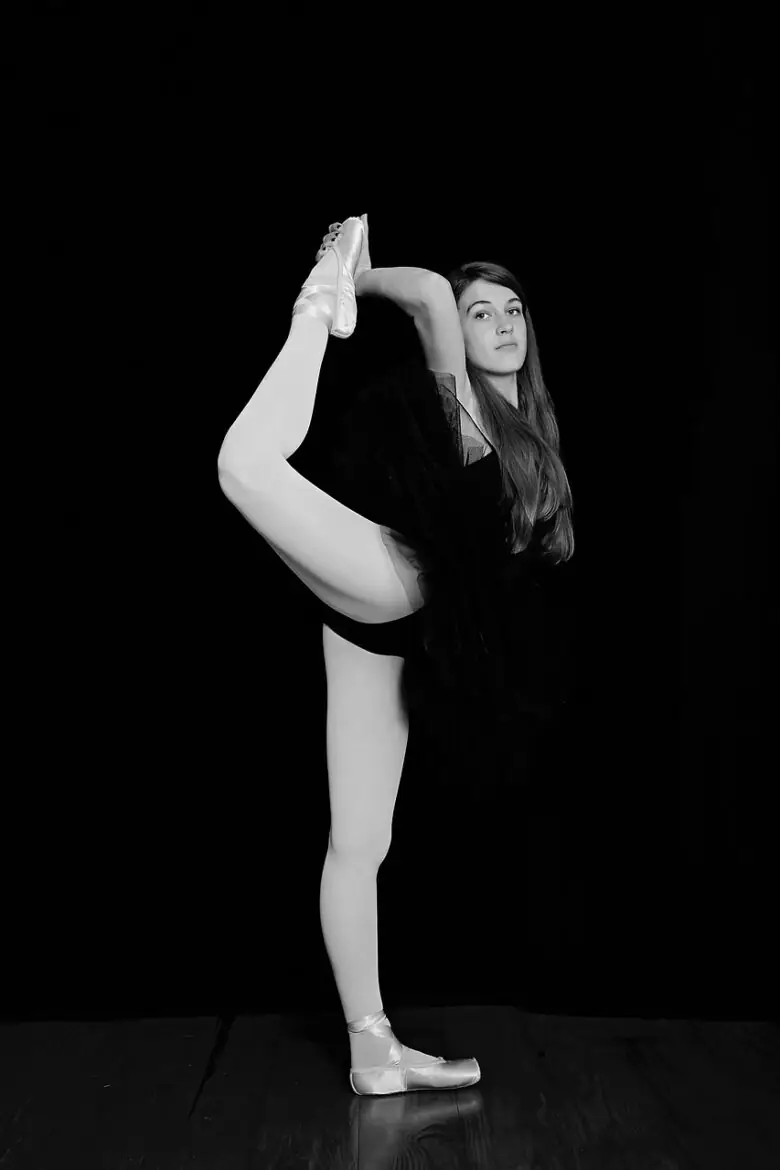
Here’s a confession that might sting: the mirror you stare at every class might be the single biggest obstacle between you and real progress. I know, I know – every studio has a wall of them, every tutorial says “check your lines,” and every beginner’s first instinct is to glance at their reflection mid-combination. But after interviewing over 40 instructors across ballroom, contemporary, and Latin styles – and spending a decade watching dancers plateau for no obvious reason – I’m convinced the mirror creates a feedback loop that flatters your ego while starving your body of the information it desperately needs.
Let me explain why, and more importantly, what to replace it with.
Your Eyes Are Stealing From Your Muscles
Think about learning to drive. At first, you stare at the road like it might vanish. Grip the wheel until your knuckles go white. But eventually your body takes over – you can change lanes, adjust the radio, even hold a conversation. That shift from conscious visual control to proprioceptive autopilot is exactly what needs to happen in dance. And the mirror? It delays that shift. Sometimes by months. Sometimes by years.
When you watch yourself in the mirror during a step, your brain assigns the visual cortex as the primary navigator. Your muscles become passengers instead of drivers. The moment you perform on a stage, at a social, or in a competition – where there’s no mirror – your body panics. It never learned to feel the movement. It only learned to see it.
“I tell my students to close their eyes for at least one full run-through every class. The ones who resist are always the ones who need it most.” – Karen Hardy, former World Professional Latin Champion and Strictly Come Dancing coach
The core problem is simple: mirrors give you external feedback about shapes, but dance lives in the internal feedback of weight, timing, and connection. Beginners need to build internal awareness from day one, and advanced dancers need to stop leaning on a visual crutch that masks bad habits with “good enough” shapes.

The Three Feedback Channels (And Which One You’re Probably Ignoring)
Not all feedback works the same way. Think of it like nutrition – you need a balance, not just one food group. Dancers who plateau hard tend to overdose on one channel and starve the other two.
| Feedback Channel | What It Tells You | Best For | Common Mistake |
|---|---|---|---|
| Visual (mirror/video) | External shape, line, spacing | Choreography cleanup, group formations | Using it during every rep instead of selectively |
| Proprioceptive (body feel) | Weight placement, muscle engagement, balance | Technique drilling, partner connection, musicality | Never training with eyes closed or in dim lighting |
| External auditory/verbal (teacher, video review, partner) | Timing accuracy, habit patterns you can’t feel yet | Breaking unconscious habits, competition prep | Only accepting praise, tuning out corrections after month 6 |
Most beginners live in the visual channel. Most advanced dancers toggle between visual and verbal but rarely invest serious time in proprioceptive training. And here’s the kicker – proprioception is the channel that separates a technically correct dancer from a mesmerizing one. It’s the difference between a musician who reads sheet music perfectly and one who makes you cry.
A Practical Protocol: The 3-2-1 Method
I didn’t invent this – I stole it from a contemporary teacher in Amsterdam who’d been quietly producing national finalists for a decade. She called it “sensory rotation,” but I like numbers, so here’s my version:
- 3 reps with full mirror access. Learn the shape, check the picture, get the choreography into your short-term memory. This is where visual feedback earns its keep.
- 2 reps facing away from the mirror. Now your body has to remember without checking. You’ll feel wobbly. Good. That wobble is your proprioceptive system waking up and doing its job for possibly the first time.
- 1 rep with eyes closed (or in very low light if safety is a concern). This is where the magic happens. Every weight shift, every timing lag, every tension pattern screams at you. You can’t hide from what you feel.
Try it for two weeks. Just two weeks. I promise you’ll notice something unsettling: the movements you thought were clean will suddenly feel messy. That’s not regression – that’s honesty. Your body is finally telling you the truth instead of letting your eyes smooth over the cracks.
What Advanced Dancers Get Wrong About “Feeling It”
Now, if you’ve been dancing 5+ years, you might be thinking: “I already dance by feel. I barely look at the mirror.” Fair enough. But here’s a trap I see experienced dancers fall into constantly – they confuse emotional feeling with physical feeling.
Emotional feeling is about expression, musicality, performance quality. It’s the goosebumps part. Physical feeling – proprioception – is about knowing precisely where your center of gravity sits, how much floor pressure your standing foot applies, whether your ribcage is rotating 15 degrees or 25. These are different skill sets.
- Can you tell, without looking, if your hip is 2 cm higher on one side? Most advanced dancers can’t.
- Can you feel the difference between a heel lead and a toe lead at tempo? Fewer than you’d think.
- Can you identify which specific vertebra initiates your body roll? Almost nobody.
- Can you sense the exact moment your partner’s weight commits to a direction? This separates good from great in partner dance.
The fix for advanced dancers isn’t the 3-2-1 method (though it helps). It’s micro-isolation drills with zero choreography. Spend 10 minutes per session on the smallest movements you can make – shifting weight one millimeter at a time, rotating one joint in complete isolation, breathing into specific muscle groups. It sounds tedious. It is tedious. It’s also how professional ballet dancers at companies like the Royal Danish Ballet and Paris Opera maintain their precision past age 35.

Video Review: The Mirror’s Smarter Cousin
If the mirror is junk food, video review is a home-cooked meal. Same basic ingredient – visual feedback – but consumed at the right time, in the right dose, with way more nutritional value.
Here’s why video beats the mirror in almost every scenario:
- You watch after performing, so your body doesn’t adjust in real time to “look right” instead of “move right.”
- You can slow down, rewind, and compare – the mirror only shows you the present tense.
- You can share it with a teacher or training partner for a second opinion that the mirror will never offer.
A 2019 study published in the Journal of Dance Medicine & Science tracked 64 intermediate-level dancers over 12 weeks. One group used standard mirror-based correction. The other used delayed video review (watching footage 10 minutes after performing). The video group improved technical accuracy scores by 23% more than the mirror group – and reported higher confidence in un-mirrored performance settings like auditions and social dances.
You don’t need expensive equipment. A phone propped on a water bottle at the back of the studio works. Record your run-throughs. Watch them during your cool-down or on the bus home. Annotate them – write down one thing that surprised you, one thing you liked, and one specific fix for next session. Three notes. That’s it. Takes 90 seconds and compounds into massive progress over months.
Building Your Personal Feedback Ecosystem
The dancers who improve fastest – at every level – aren’t the most talented or the most obsessed. They’re the ones who’ve built a diverse feedback ecosystem and rotate through it deliberately. Here’s what that looks like in practice:
- Weekly video self-review. Film at least one full combination per week. Watch it critically, not emotionally.
- Monthly “blind” session. One full class per month with no mirror, no video, and ideally dim lighting. Force your body to navigate by feel alone.
- Quarterly outside-eye check. Book a private lesson, attend a workshop, or ask a dancer you respect to watch your work. Fresh eyes catch patterns your daily routine normalizes.
- Daily body scan. Before you even start warming up, stand still for 60 seconds with your eyes closed. Feel where tension lives today. Notice which foot carries more weight. This tiny habit rewires how you listen to your body.
Sound like a lot? It’s less time than you spend scrolling Instagram dance reels, and infinitely more useful. The whole point is to stop relying on a single feedback source and start cross-referencing. When what you see on video, what you feel in your body, and what your teacher tells you all converge – that’s when technique clicks into place like a lock finding its key.
So here’s the question I’ll leave you with: the next time you walk into the studio, what if you turned your back to the mirror for the entire first combination? Not to prove a point. Not because some article told you to. But because you’re genuinely curious what your body knows – and what it’s been hiding behind a reflection all along. You might hate it. You might stumble. But I’d bet good money you’ll learn more in those three minutes than in the last three months of mirror-gazing. Try it once. Then decide.
For practice sessions, browse our dancewear for ladies and practice shoes.


