
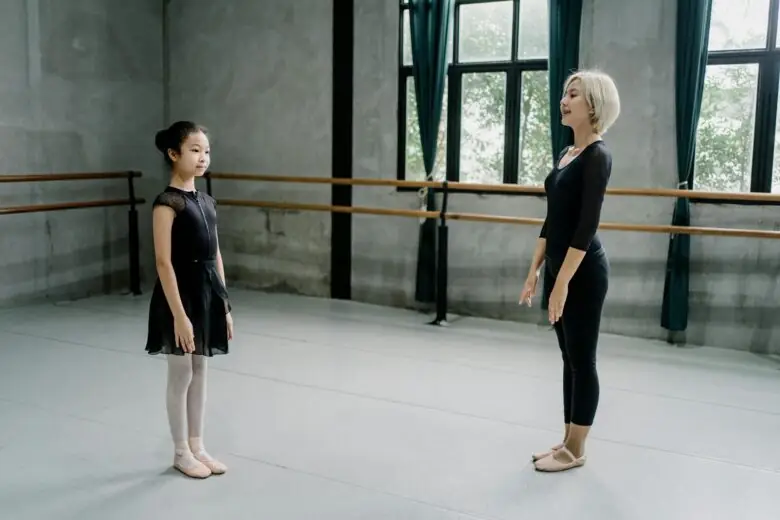
Good dance teaching often looks effortless from the outside. Students remember the energy in the room, the choreography and the corrections that “clicked” – but not the planning and the many small decisions behind them. This article is for dance teachers and rhythmic gymnastics coaches who want to look at their own classes, and for students and parents who want to understand what good teaching involves.
1. A clear structure that builds up
Each class has a logic: from warm-up and simple exercises to more complex combinations, jumps and turns. Difficult elements come when the body is ready for them, not at the start. Students may not notice the structure – they just feel that the class flows.
2. Specific corrections
“Better” and “more” help less than a concrete instruction such as “keep your weight over the ball of the foot in the preparation”. A good correction names what to change and, ideally, why.
3. Using names
A correction with the dancer’s name gets attention. Using names also helps teachers notice if some students have not been addressed at all during a class.
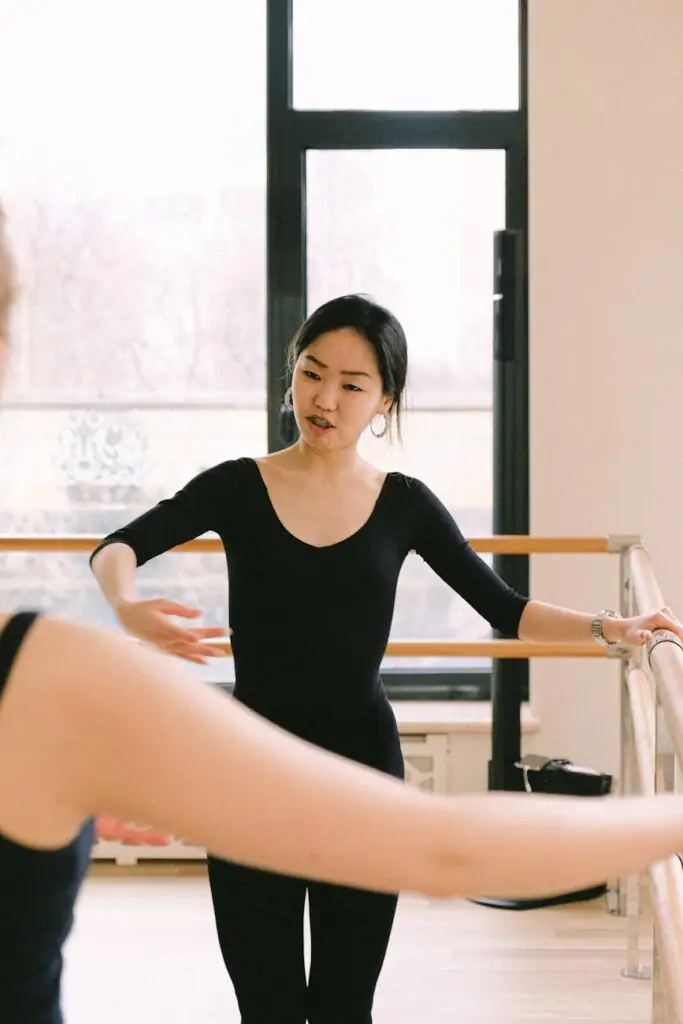
4. Showing and explaining
Some students learn best by watching, others by hearing an explanation or by feeling a movement. Teachers who combine demonstration, words and images – and occasionally hands-on guidance, with the student’s permission – reach more of the class.

5. Praise that is as specific as corrections
“Good” is pleasant; “your arms stayed in front of you in that turn” tells the dancer what to keep. Specific positive feedback is a correction too – it shows what the right version feels like.
6. Safety as a matter of course
- A proper warm-up before jumps, turns and stretching.
- No forced stretching and no pushing through pain.
- Progressions adapted to age, level and growth phases.
- Pointe work and difficult acrobatic elements only after checking strength and readiness.
7. Checking understanding
A nod does not mean a correction has been understood. Asking a dancer to show the change, or to say what they will try, makes sure the message has landed.
What students can take from this
Students cannot plan the class, but they can help good teaching work better: arrive warm, apply corrections, ask questions and practise between classes – see six habits that help your teacher help you. If you are unsure whether your teacher is demanding or simply not right for you, read strict or bad teacher – how to tell the difference.
FAQ
What makes a good dance teacher?
A clear structure, specific corrections and praise, safe progressions and respect for every student – whatever their personal style.
How many corrections should a teacher give?
There is no fixed number. What matters is that corrections are specific, that every student gets attention and that corrections are balanced with feedback on what is working.
Can a strict teacher be a good teacher?
Yes – as long as the training is safe and students are treated with respect.


