

Imagine stepping into a ballet theatre in 2050. As the curtain rises, dancers appear not in traditional tutus or tights but in costumes that pulse with light, adapt to every movement, and even monitor their vitals in real-time.
Dancewear in 2050 may be a fusion of art and advanced technology, enhancing performances and offering new ways for dancers to express themselves. Here’s a look into what dancewear of the future might look like.
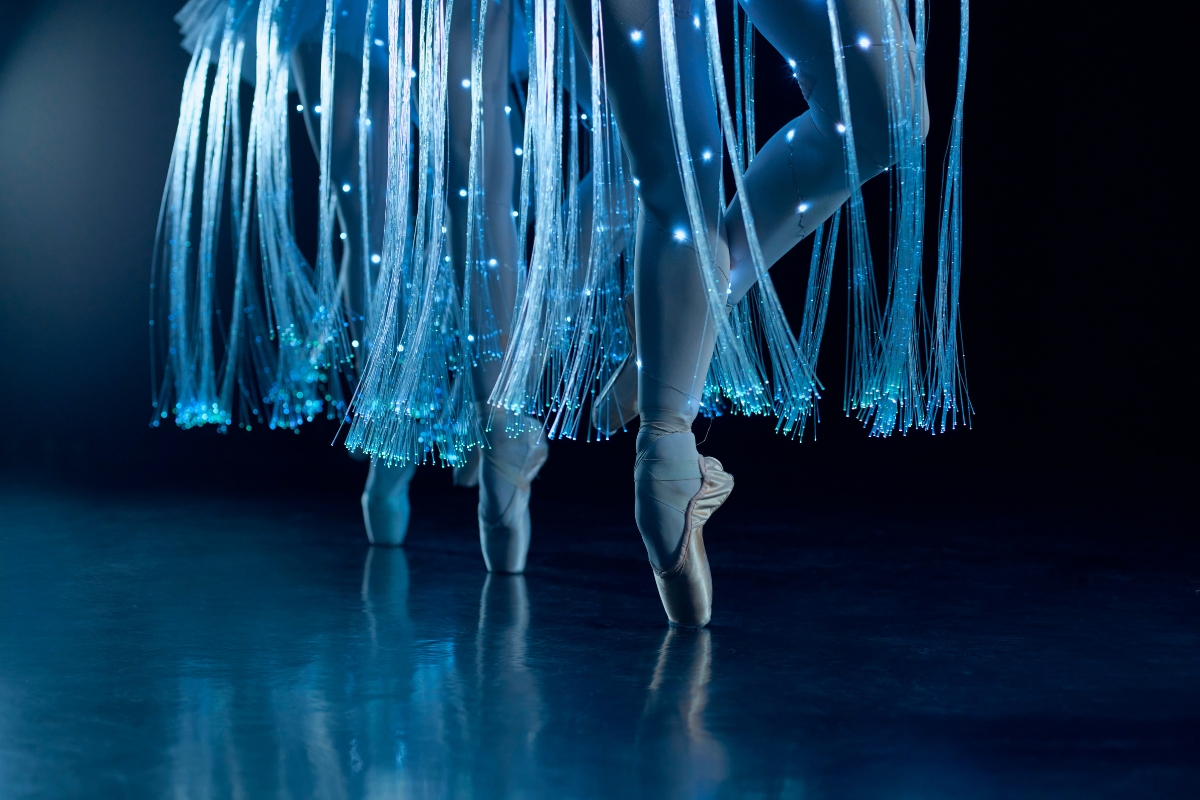
Self-illuminating fabrics: costumes that light up the stage
- In the future, dance costumes may be embedded with fiber-optic threads and micro-LEDs that respond to movement and music. Imagine a dancer’s costume glowing brighter with each leap or pulsing in sync with the rhythm of the performance. This technology would add a visual dimension to the dance, allowing costumes to shift colors or brightness to reflect the mood of each scene. Advanced sensors could adjust lighting effects dynamically, creating a mesmerizing experience for the audience.
Adaptive fabric: costumes that mold to the body’s movements
- Future dancewear could feature adaptive fabrics that mold to each dancer’s unique movements. Using “smart” polymers that change shape with muscle contraction, the costume might contract with an arabesque or expand with a grand jeté, enhancing lines and forms. These costumes could also be programmed to become more supportive around joints, like the knees and ankles, during jumps and turns, potentially reducing the risk of injury and fatigue for dancers.
Biofeedback-integrated costumes: real-time performance data
- Dancewear in 2050 could include biofeedback technology that tracks vital signs such as heart rate, muscle exertion, and oxygen levels. Small, flexible sensors woven into the fabric would send data to a monitoring device or even directly to the dancer’s wearable device. This information would help dancers manage their stamina and performance in real-time, offering invaluable feedback during rehearsal and performance. For instructors, this data would help tailor training regimens to individual dancers’ needs.
Temperature-regulating materials: staying cool on stage
- A challenging aspect of dance is managing body temperature under hot stage lights or in intense rehearsals. Future costumes may be made from temperature-regulating fabrics that can adapt to the dancer’s body heat. Using materials similar to those developed for space travel, costumes could cool dancers during strenuous movements and keep them warm during pauses, enhancing both comfort and endurance.
Haptic feedback for precision and alignment
- Correct alignment and posture are crucial in dance, and in 2050, costumes may provide subtle haptic feedback to help dancers perfect their movements. Tiny, flexible motors embedded in the costume could give gentle nudges or vibrations to signal when a dancer’s posture is slightly off or when they need to adjust a limb. These cues would be silent and private, offering dancers real-time corrections without disturbing the performance flow.
Augmented reality (AR)-enabled costumes: enhancing audience engagement
- Future dancewear might incorporate augmented reality elements visible through AR glasses or apps. With AR integration, the audience could see enhanced visual effects, like trails of light following a dancer’s movements or virtual set elements surrounding them. This would open up new possibilities for storytelling in dance, allowing costumes to change appearance mid-performance or interact with digital elements on stage.
Sustainable and self-repairing materials
- Sustainability will likely be a top priority for future dancewear. Costumes in 2050 may use fabrics engineered to be fully biodegradable or made from recycled materials. Additionally, some high-tech materials may be designed to self-repair, “healing” small tears or holes when exposed to heat or certain chemicals. This would reduce waste and allow dance companies to reuse costumes without constant repairs or replacements.
Customizable designs through 3D printing
- By 2050, 3D printing technology may allow dance companies to create costumes on demand. Using body scans, designers could print costumes that are perfectly tailored to each dancer’s measurements, reducing the need for alterations. Additionally, this technology would enable dancers to experiment with intricate, avant-garde designs that would be difficult or impossible to create by hand.
Voice-activated costumes: on-the-go adjustments
- Imagine costumes that respond to verbal commands. In 2050, dancers might adjust the fit or change colors simply by speaking to their costumes. For instance, a dancer could command the costume to “tighten at the waist” or “switch to blue” if the choreography calls for a change. Voice-activated costumes would allow for quick, hands-free adjustments, streamlining the process during busy rehearsals or quick costume changes.
Enhanced sound integration: costumes as instruments
- In the future, some costumes might incorporate sound-emitting technology that allows dancers to create music or sound effects with their movements. Using sensors that detect speed, pressure, and direction, costumes could trigger sound elements that match the intensity of each step, leap, or turn. This would allow dancers to become part of the musical composition, adding an interactive dimension to performances and creating an immersive experience for the audience.


